Why Zero Trust Needs Hardware to Secure Critical Infrastructure: Insights from a New Forrester Report
In 2025 alone, ransomware attacks on critical infrastructure caused over $10 billion in damages globally. For operators of power plants, water utilities, and transportation networks, the impact isn’t just financial—it shows up as blackouts, service disruptions, and lost public trust.
A new Forrester report, “From Compliance To Continuity: How Zero Trust Powers Operational Resilience,” takes a hard look at this reality and lays out how Zero Trust can move beyond check‑the‑box compliance to become a true resilience strategy for always‑on operations. It’s essential reading for anyone responsible for keeping critical services online as threats and connectivity grow.
This article highlights a few key themes from the report and shares where hardware‑enforced security plays a crucial role for critical infrastructure. For the full analysis and recommendations, we strongly recommend reading the Forrester report itself.
Compliance vs. Resilience: The Gap Forrester Calls Out
Regulations like NERC CIP, NIS2, and DORA have raised the baseline for cybersecurity. They define the minimum standards needed to avoid fines and formal findings. But as the Forrester report underscores, recent supply chain compromises and rapid IT/OT convergence have exposed a painful truth: an organization can be fully compliant and still face catastrophic outages.
Compliance helps you pass an audit. Resilience helps you stay online when something goes wrong.
Forrester emphasizes that bridging this gap requires a shift in mindset—from “keeping bad things out” to assuming breach and designing systems to continue operating safely under stress. That’s where Zero Trust comes in.
If you want the full picture of how Forrester defines this evolution from compliance to continuity, you’ll find it in the report. HERE
Zero Trust as a Resilience Engine for Critical Infrastructure
Zero Trust is often treated as a buzzword. In the Forrester report, it’s framed very differently: as a model for operational resilience—keeping critical services running even when individual systems or controls fail.
At a high level, Forrester highlights capabilities such as:
-
Verifying access continuously, not just at login
-
Limiting how far an attacker can move if they do get in
-
Responding quickly and in a way that keeps essential operations online
For critical infrastructure operators, the message is clear: Zero Trust isn’t just an IT project. It’s a way to design systems so that a security incident doesn’t automatically become a service outage.
The report goes deeper into how these capabilities work together in real‑world scenarios. The details—and the examples—are where the value really is.
Why Software‑Only Controls Aren’t Enough at the OT Boundary
Translating Zero Trust principles into OT environments is where many organizations struggle.
Software‑based controls like firewalls, VLANs, and SDN are essential, but they have limitations in high‑consequence environments:
-
Configuration drift and complexity: Policy changes under pressure can quietly create unexpected pathways into critical systems.
-
Software vulnerabilities and patching gaps: Even security tools can introduce new attack surfaces.
-
Credential theft: If attackers obtain powerful credentials, they may be able to tamper with or disable software defenses.
When the only thing separating a compromised IT system from a turbine, treatment plant, or control center is a software rule, the risk can be higher than many operators are comfortable with.
The Forrester report highlights the importance of limiting blast radius and enforcing strong boundaries as part of a resilience strategy. The question becomes: how do you do that in OT, where uptime and safety are non‑negotiable?
Where Hardware‑Enforced Security Complements Zero Trust
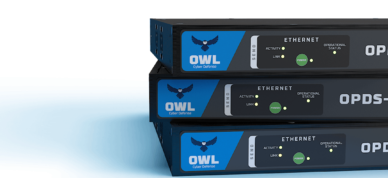
This is where hardware‑enforced security enters the picture—especially technologies like one‑way data diodes that physically enforce the direction of data flow between OT and IT or cloud environments.
A data diode is a hardware device that allows data to move in only one direction. Operational and monitoring data can flow out of the OT network to IT, cloud, or AI platforms for analytics—but control traffic, commands, and malware cannot flow back in.
For operators of critical infrastructure, this kind of physical enforcement can:
-
Create much stronger isolation for critical control systems
-
Enable safer OT‑to‑cloud and OT‑to‑AI integrations without opening a control path back into OT
-
Provide clear, auditable evidence of segmentation to regulators and insurers
In other words, hardware‑enforced boundaries can help bring the resilience outcomes Forrester describes—smaller blast radius, “fail‑operational” behavior—into environments where software alone may not be enough.
At Owl Cyber Defense, we focus specifically on these hardware‑enforced controls. Our work with utilities and critical infrastructure operators is about helping them apply Zero Trust‑style thinking at the OT boundary, so they can modernize and share data without increasing systemic risk.
A Practical Path Forward (And Why the Forrester Report Matters)
Achieving operational resilience doesn’t happen overnight, but the direction is clear:
-
Understand where your most critical OT domains connect to IT, cloud, and remote users
-
Apply Zero Trust principles to limit how far an attacker can move and how much damage they can do
-
Strengthen the highest‑risk boundaries with hardware‑enforced protections that don’t depend on perfect configuration
The Forrester report, “From Compliance To Continuity: How Zero Trust Powers Operational Resilience,” goes into far more depth on how organizations are making this shift—and what good looks like.
If you’re responsible for critical infrastructure, it’s one of the most useful third‑party perspectives you can put in front of your team and stakeholders. Our role at Owl is to help you turn that guidance into concrete architectures and controls that work in real OT and mixed IT/OT environments.
Want to explore the full Forrester analysis?
Download the report, “From Compliance To Continuity: How Zero Trust Powers Operational Resilience,” and see how Zero Trust and hardware‑enforced security can work together to keep critical operations online.